Showing posts with label asteroid. Show all posts

Monday, October 5, 2020

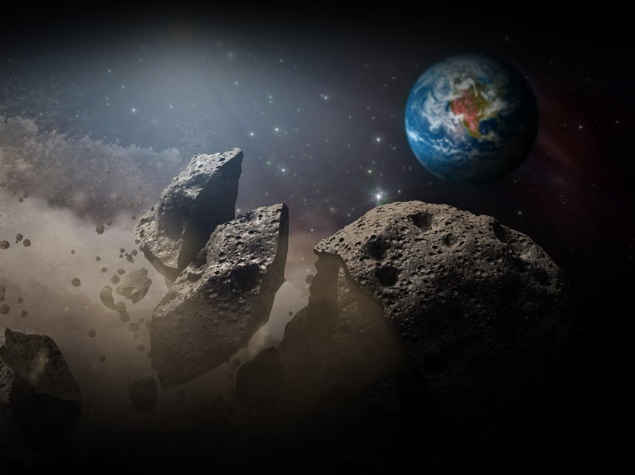
Asteroid, The Size Of An Airliner, May Collide With Earth's Orbit: NASA


The latest asteroid visiting the Earth's neighbourhood is within two weeks of the last one on September 24, when it zoomed past Earth at a distance of about 13,000 miles above our planet's surface.

An asteroid is likely to cross the Earth's orbit on Wednesday. NASA's asteroid monitoring centre has said that 2020 RK2 - an asteroid - is likely to cross the Earth's orbit but it will be about 2,380,000 miles away from our planet. The space research agency believes the asteroid is unlikely to cause any damage.


Friday, June 23, 2017

Asteroid Collision With Earth Inevitable, Say Experts


: An asteroid strike on Earth is just a matter of time and it could destroy major cities, experts have said. According to Alan Fitzsimmons from Queen's University Belfast in Britain, it is a case of when an asteroid collision will happen, rather than if it will happen.

The warning comes ahead of the Asteroid Day to be observed on June 30. On that day in 1908, a small asteroid exploded over Tunguska in Russia's Siberia, levelling trees and burning the ground over 2,000 square kilometres.

Wednesday, June 7, 2017

Threat of Asteroid Hitting The Earth Growing, Say Experts


The risk of a sizeable asteroid hitting the Earth is significantly growing every few years, warn Czech scientists who analysed 144 fireballs from a recent meteor shower. The Taurid meteor shower showed significantly enhanced activity in 2015. Researchers found that this was due to a well defined orbital structure.

Researchers from the Astronomical Institute of the Czech Academy of Sciences showed that a “new branch” of Taurids contains at least two asteroids of the size 200-300 metres. Since it is likely that numerous of undiscovered asteroids of decameter or even larger size are present as well, impact hazard increases significantly when the Earth encounters the Taurid new branch every few years, researchers said.